Pro-Renewables Policy
Fast-track permits, simplified environmental licensing, attractive feed-in tariffs and tax incentives — ratified under the elected government.
 MEPSI Solar Farm SF3M
Investment Teaser · Ecuador · South America
SFML the first phase of Las Tres Marías, a three-phase solar complex approaching 200 MW in total capacity: a 62 MW utility-scale solar PV plant in Imbabura, Ecuador — secured by a 25-year fixed feed-in tariff of $80.36/MWh in a fully dollarized economy.
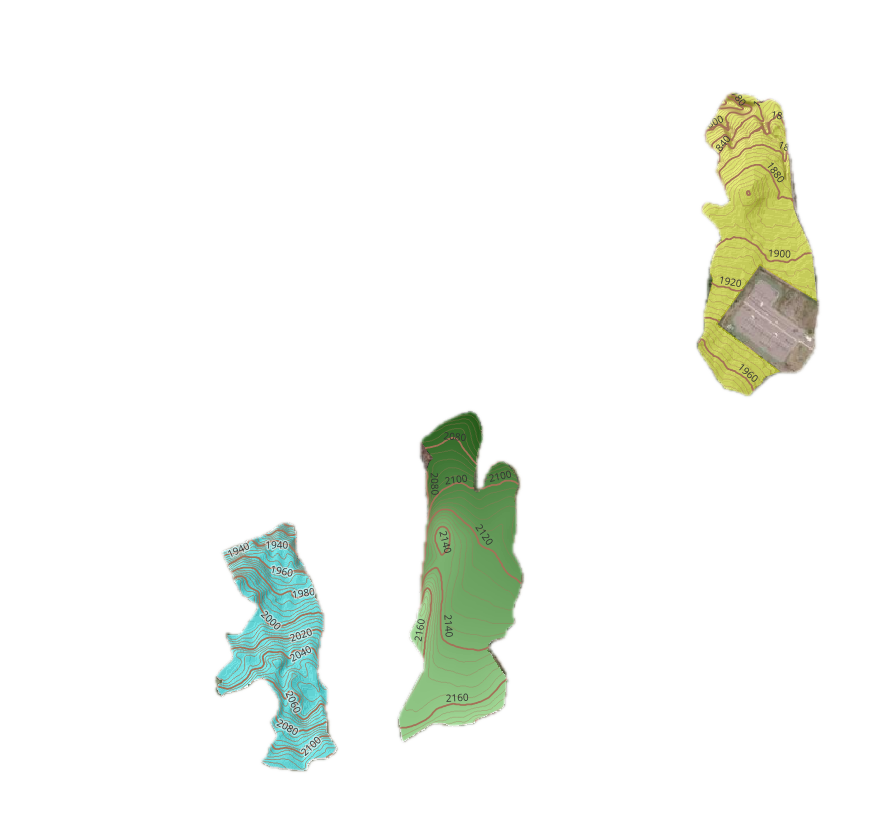
Located in Imbabura, Ecuador, on a secured 45-hectare site at 1,800–1,960 m above sea level, directly on the equatorial line — one of the best regions in the world for Direct Normal Irradiation (DNI) and Global Horizontal Irradiation (GHI).
Ecuador faces an unprecedented energy crisis: a 1,500 MW deficit and a 8-year backlog of major generation projects. Economic growth and the expansion of the mining and shrimp sectors have outpaced existing energy infrastructure, creating urgent demand for sustainable power.

Fast-track permits, simplified environmental licensing, attractive feed-in tariffs and tax incentives — ratified under the elected government.
US-dollar economy eliminates currency exchange risk, with no repatriation taxes on revenue dividends.
A highly experienced local development team with a proven track record navigating Ecuador's regulatory and socio-environmental landscape.
Land purchase agreement finalized — a strategic location with unbeatable proximity to the substation for cost-effective interconnection.
Backed by Ecuador's new energy regulations with a fixed feed-in tariff of $80.36/MWh under a 25-year PPA.
Construction expected to complete within 12 months of financial closure, enabling rapid revenue generation.
Ecuador's 1,500 MW energy deficit and 8-year generation projects backlog create urgent, sustained demand for new power — a unique window for this project to address the nation's needs like 350MW shrimp industry unprovided energy demand. Partial outages are expected in 2027/2028, and for September 2026 energy rationing for the industry sector have already been announced.
Ecuador has significant potential for Direct Normal Irradiation (DNI) and Global Horizontal Irradiation (GHI) due to its geographic location on the equatorial line. SolarGIS TMY multi-year weather data; global variability (weather + system) of 2.7% (quadratic sum). 109 GWh/yr used conservatively for cash-flow analysis(PVSYST).
| E_Grid simul / P50 | 125.34 GWh |
|---|---|
| P90 | 121.02 GWh |
| P95 | 119.80 GWh |
| Variability | 3.38 GWh |
| Year-to-year variability | 2.0% |
|---|---|
| PV module modelling/parameters | 1.0% |
| Inverter efficiency | 0.5% |
| Soiling & mismatch | 1.0% |
| Degradation | 1.0% |
| Climate change | 0.0% |
| Global variability | 2.7% |


| Installed Capacity | 62 MW |
|---|---|
| Average Annual Production | 109 GWh |
| Cycle Hours | 5.11 |
| Solar PV Module | 620 W |
| Number of Panels | 120,016 |
| Transmission Line | 200 m |
| Transmission Line Voltage | 230 kV - req |
| COD | ≤2 years |
| CAPEX | US$ 42.6M |
|---|---|
| Equity | US$ 8.5M |
| Debt Facility | US$ 34.08M · 10-year term + 1 grace |
| Equity IRR | > 19% – > 23% |
| Concession | 25 years |
| Feed-in Tariff | $80.36/MWh · concession life |
| LCOE | $64/MWh |
| Land Rights | Sale agreement with owner |
Indicative LCOE ranges in USD/MWh. The project is highlighted against comparable generation and storage technologies.
EBITDA, EBIT, taxes and net income per year over the 25-year concession.
Interactive model of the full project financials — move the levers and watch the returns, DSCR and breakeven respond in real time.
Indicative model based on the project's base assumptions (MEPSI cost model, double-declining depreciation, 25-year concession). For discussion purposes only.
Completing pre-feasibility studies to apply for the necessary permits under regulation 005/24 (Certifcicado de Calificación).
Upon feasibility completion, the government awards the interconnection point for 18 months, during which all technical and financial aspects are defined.
Detailed engineering design completed; final permits and project financing secured simultaneously.
Through a transparent tender, the EPC contract is awarded to best-in-class companies.
SFML is only the first Maria. Her two sisters sit adjacent, with land secured and the grid connection already engineered — ready to be developed at the investor's convenience.
Same irradiation, same land terms, same playbook as the first María. Ground can be broken the day you decide — the hard parts are already done.
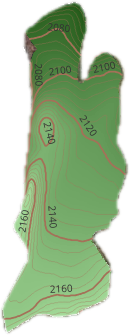
The smallest sister is the fastest build: the quickest route to adding contracted revenue under the same fixed tariff.
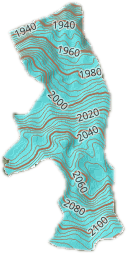
The substation is already there for the first María (230 kV), with the transformer sized at 220 MVA. Sizing it for a single 60 MVA plant would have been a waste; instead, both sisters tie into a private switchgear station that aggregates all three farms before exporting to the substation — a total transmission line of just 2.4 km. One point of interconnection, zero right-of-way over third-party land, and a transformer with headroom to spare.